
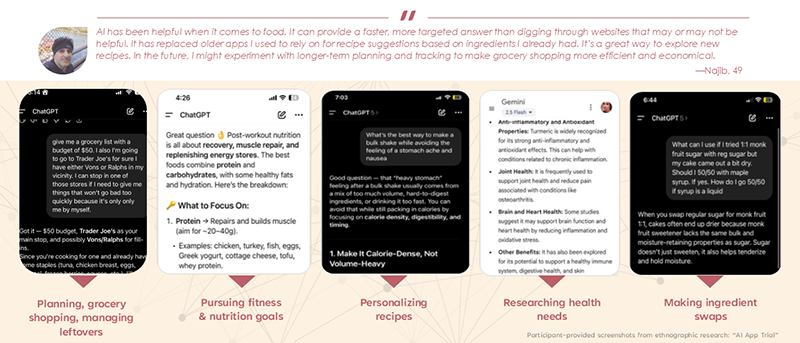
Will AI-assisted food culture produce the next generation of home cooking savants—or quietly erode the human touch and personal traditions that make food meaningful? The answer isn’t clear yet. What is clear is that artificial intelligence is rapidly gaining a foothold in consumers’ food lives, from what they cook to what they buy to how they determine “healthy” choices. Our clients have been eager to understand how consumers across generations are navigating this shift—and where the opportunities and risks lie.
We sought out to determine exactly that in our newly-released report: Food and Technology 2026: The Digital Food Culture Gap.
How consumers are using AI in their food lives
While AI’s impact on work and education often dominates headlines, consumers are experimenting with AI for food-related needs nearly equally. AI often acts as a centralized hub that overlaps with apps consumers already rely on—think New York Times Cooking, Instacart, Uber Eats—but promises faster, more personalized outcomes when it comes to researching ingredients, planning meals, getting cooking assistance and tracking nutrition or health goals.
The majority of consumers are interested in using AI to help them streamline the chaos of food decision-making, like...
- Discovering new food and beverage products (63%)*
- Creating and/or personalizing recipes (58%)*
- Automating their grocery shopping (51%)*
When AI starts to feel like a threat
Still, enthusiasm comes with unease. Consumers across generations share concerns about its growing influence and impartiality. In fact, 45% are concerned AI will only promote products that are sponsored by a particular brand or company.*
As Amanda, 37, put it:
“When AI starts to suggest specific products and brands, that seems like anything can be sponsored. I want AI to be unbiased.”
The bottom line
AI makes consumers’ lives easier—and that’s a double-edged sword that brands need to be mindful of. Understanding how consumers actually want technology to show up in their daily food lives is no easy feat, but Food and Technology 2026 is designed to be your roadmap to success. The report unpacks the cultural, emotional and behavioral dynamics shaping today’s digital food ecosystem, while identifying strategic opportunities to:
- Design tools that solve real daily food challenges
- Create content that’s aspirational and grounded
- Leverage algorithms and creators with intention
- Meet rising expectations around transparency and trust
- Activate category-specific digital pathways that drive conversion
Purchase the report today to shape—not be shaped by—digital food culture.
*Source: Food and Technology 2026: The Digital Food Culture Gap, Hartman Group