
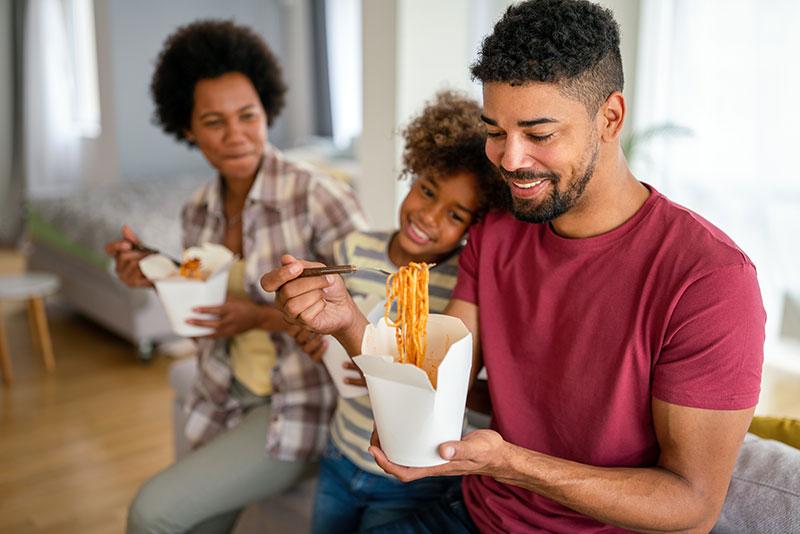
Despite 79% of consumers saying mealtimes are among their favorite times of day and that they love them,1 American meal routines have grown increasingly fragmented. Instead of shaping schedules around meals, consumers flex their eating occasions around other activities and current needs: blending meals and snacks, adjusting eating times, content, portions and level of preparation.
Designing for the realities of mealtime
Mealtimes are fraught with constraints and challenges across the process, particularly when it comes to planning and preparation.
Consumers frequently point to a lack of inspiration as a mealtime planning challenge, but the underlying story is more nuanced: fewer than half say they struggle with meal ideas weekly or more.1 Instead, consumers are looking for support in overcoming competing constraints like boredom, protein fatigue, mood mismatches and food waste. They don’t necessarily need entirely new ideas; they need ways to make familiar routines work better.
Preparation brings its own set of challenges. Consumers want to make meals as quickly and easily as possible, with minimal mess and fewer ingredients, while still prioritizing cooking from scratch. The challenge is finding the right balance of involvement—enough to make cooking feel rewarding, without making it feel like work.
Dinner is where meal ideals and real life meet
These tensions are particularly visible at dinner. As the only meal that more than half (71%) of Americans eat daily,1 dinner is the culmination of traditional mealtime ideals. At the same time, 84% say their meal schedule shifts in response to other demands, at least to some degree. Dinner therefore requires consumers to continually flex between competing needs: a healthy meal and a tasty meal; a planned meal and a current craving; a scratch-made meal and minimal time in the kitchen; familiar flavors and something new.
That creates an opportunity for food companies to help consumers flex dinner without giving up the parts of the experience they value. Meal solutions can provide just the right amount of involvement, while products and ingredients can make familiar dishes feel new or help simplify preparation.
Competing needs and constraints aside, consumers have a deep desire to enjoy the experience of creating meals—from browsing for inspiration and trying new products to learning, creative experimentation and showcasing their skills. The goal, then, is to preserve enough participation to make cooking pleasurable while removing enough friction to make it manageable.
Your guide to supporting better meal experiences
Meals 2026: From Structure to Flexibility offers the necessary insights and targeted recommendations to help your team develop those solutions. The report explores in depth how consumers plan, procure, prepare and partake in meals amid the competing demands of modern life. We introduce the Meal Needs Framework, providing a lens for understanding the shared and distinct needs shaping each stage of the meal process, taking a closer look at how these dynamics play out across eating occasions—with particular focus on dinner.
Explore Meals 2026: From Structure to Flexibility to uncover the needs, tensions and opportunities shaping the future of meals.
1. Source: Meals 2026: From Structure to Flexibility, Hartman Group