
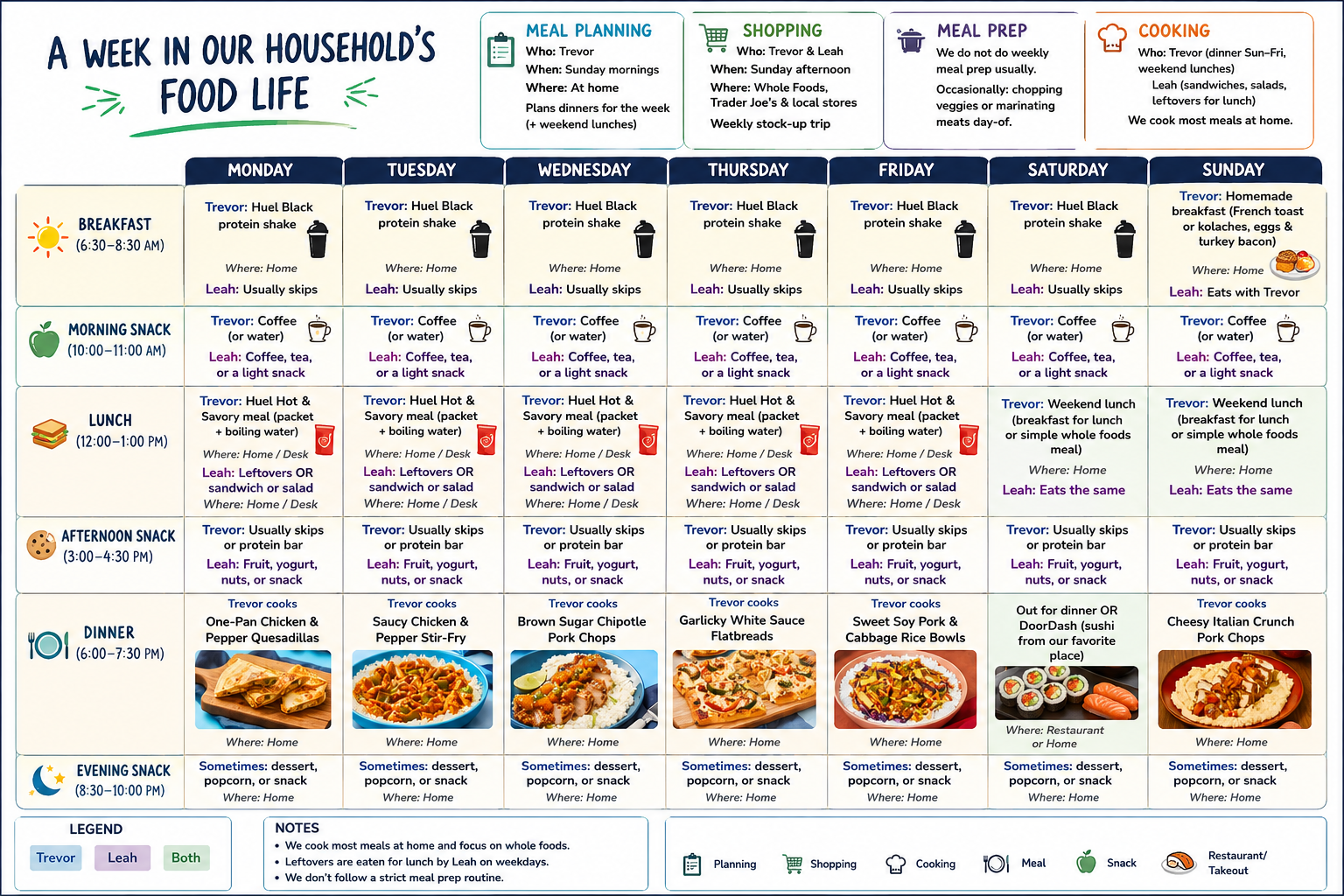
As our team analyzes the ethnographic research for our upcoming Meals 2026 study, one theme continues to surface: modern life is not structured around three shared meal occasions as it once was. Historically, our households functioned as a singular unit and life was structured around the sacred times of breakfast, lunch and dinner. Today, however, we see our households as comprised of individual units—and as a result, most consumers fit meals around other structures in the lives of each individual in their household: work, school, gym, socializing, hobbies and more.
Meals function as a rhythm that consumers continually adjust to support the lives they want to lead, changing in timing, composition and even purpose depending on what the day demands. Without this planned rhythm, consumers' lives are chaotic. Given that consumers vary in their tolerance of chaos, they also vary in how much flexibility is necessary for achieving their preferred rhythm.
Some households thrive on detailed planning and predictable schedules. Others embrace greater spontaneity. What matters is finding an approach that feels sustainable over months and years while supporting priorities like health, family, work, finances or personal fulfillment.
Our early research findings suggest this dynamic is becoming even more important as consumers navigate increasingly complex digital lives. Being immersed in technology, consumers are constantly exposed to information overload and rapid multitasking. This environment creates cognitive overload, placing even more demand on attention and decision-making. Every decision requires mental energy—including deciding what's for dinner.
Consumers respond by developing repeatable approaches to meals that reduce cognitive load. Planning ahead, maintaining familiar meal repertoires, simplifying shopping trips, or building flexible routines all help conserve time, money, and mental bandwidth. Meals become one of the few parts of daily life that consumers can shape with intention.
For food and beverage companies, this raises an important question: Are you designing products, services and experiences that fit into consumers' evolving meal rhythms—or are you still building around assumptions rooted in a more structured era?
Our upcoming Meals 2026 study explores this transformation in depth, examining how consumers leverage the “4 Ps” of meals: Plan, Procure, Prepare and Partake diverse strategies consumers use to create sustainable rhythms and the opportunities these evolving lifestyles create for CPG brands, food retailers and foodservice providers
Pre-purchase your copy now so you can get the full story when the study is released in September.
Source: Meals 2026: Occasions, Needs and Constraints, Hartman Group