
From space, Earth looks completely different. Borders disappear. Weather systems take on new shapes. The familiar becomes abstract—and you can see patterns that are difficult to recognize from the ground.
Consumer trends work much the same way.
Take the growing concern around ultra-processed foods. At a high level, most consumers have been paying increasing attention to processing, ingredients and how food is made. But zoom in, and the picture becomes much more nuanced.
What consumers believe about a health trend—and how that plays out in their daily life—depends in part on where they are in the World of Health and Wellness.
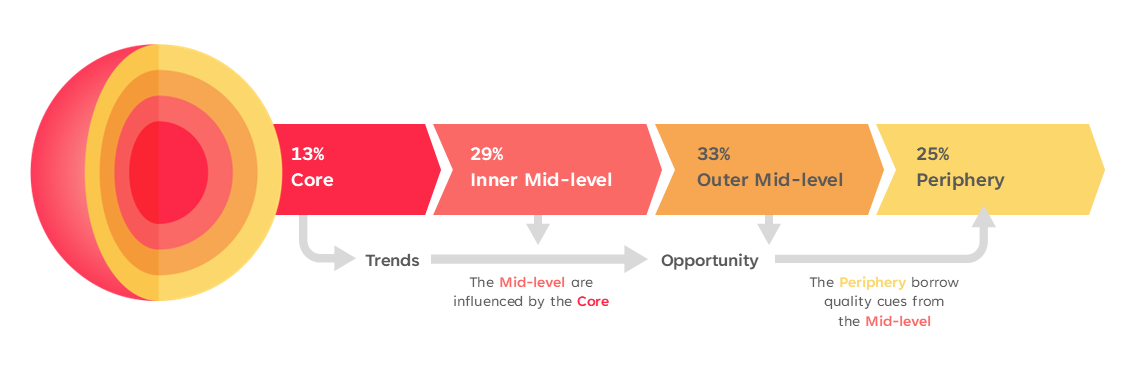
Consumers in the Core of Hartman Group’s World of Health & Wellness Model are the most engaged with health and wellness, and thus bring more purchase criteria into consideration when evaluating food and beverage products. With intimate knowledge on the relationship between health, processing and the modern food system, these consumers tend to seek out unprocessed whole food options first, engaging in more scratch-made cooking and local sourcing. However, Core consumers are not immune to the busyness of life: when convenience is a factor, these consumers may make exceptions for high quality minimally processed alternatives. In these instances, they prioritize authenticity and scrutinize ingredient lists to ensure products deliver on their promises. Ultimately, their views on processing are deeply connected to broader beliefs about vitality and long-term health.
Mid-Level consumers bring a different, more pragmatic perspective. “Less processed” might signal better quality, more natural ingredients or a healthier choice—particularly when these benefits are accessible and easy to understand.
For consumers in the Periphery, processing may carry considerably less weight in the decision. Price, convenience, taste or familiarity may be more immediate considerations. They may recognize the language around ultra-processed foods without organizing their purchasing decisions around it.
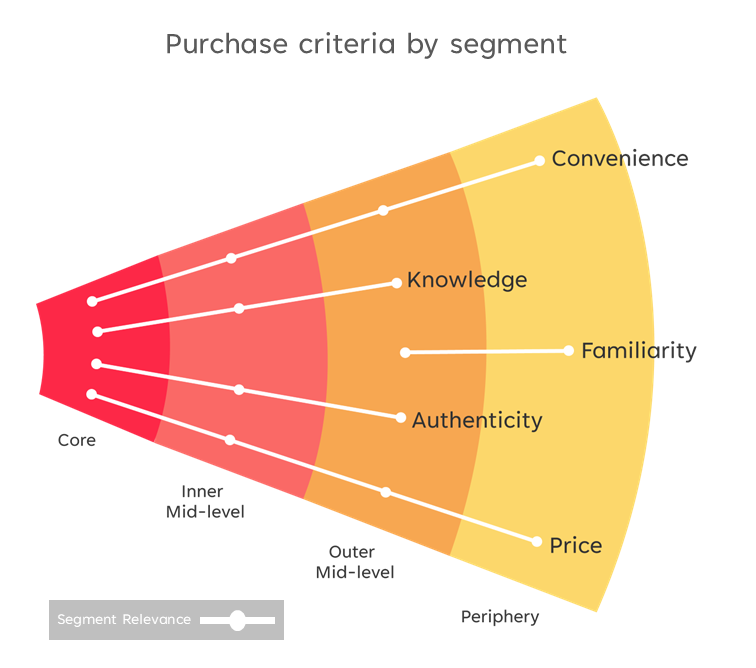
Different priorities signal different behaviors
Without careful analysis, consumer research can sometimes flatten these differences. Surveys can tell us how many people agree that minimal processing is important, but it’s sometimes more challenging to discern aspiration from true behavior change with quantitative data alone.
That is where perspective becomes critical.
At Hartman Group, our ethnographic research allows us to go deeper into the context behind what consumers say and do. We explore the beliefs, motivations, experiences and cultural influences that shape their perspectives—because two consumers can give the same survey response while attaching very different meaning to it.
And perspective shapes much more than purchasing decisions. It influences how consumers receive information, which sources they trust, how they talk about health and wellness and ultimately how they act.
This is why the World of Health & Wellness Model is more than a framework for identifying target consumers. It is a lens for perspective-taking.
Knowing that a particular wellness trend matters to your target audience is a useful starting point, but understanding why it matters to them, what it means in their lives and what they are likely to do with it is where the real opportunity lies.
A product built around clean ingredients and minimal processing may resonate with one consumer because it reinforces deeply held beliefs about health. Another may respond because specific claims (like no artificial flavors, colors or preservatives) makes the product feel higher quality. Someone else may barely notice it because they simply gravitate toward the brand they always buy on sale.
The trend is the same, but each consumer is seeing something different depending on their level of engagement within the World.
Thankfully, you don't need to get into a space shuttle to understand these nuances. The World of Health & Wellness Model gives you a different vantage point—one that helps you see the consumer, the trend and the opportunity from a new perspective.
Connect with our team to learn how the World of Health and Wellness Model can help you unlock new opportunities and consumer segments.